Wood in containers: most of the moisture comes from the cargo, not the air
⏱ Reading time: 9 minutes

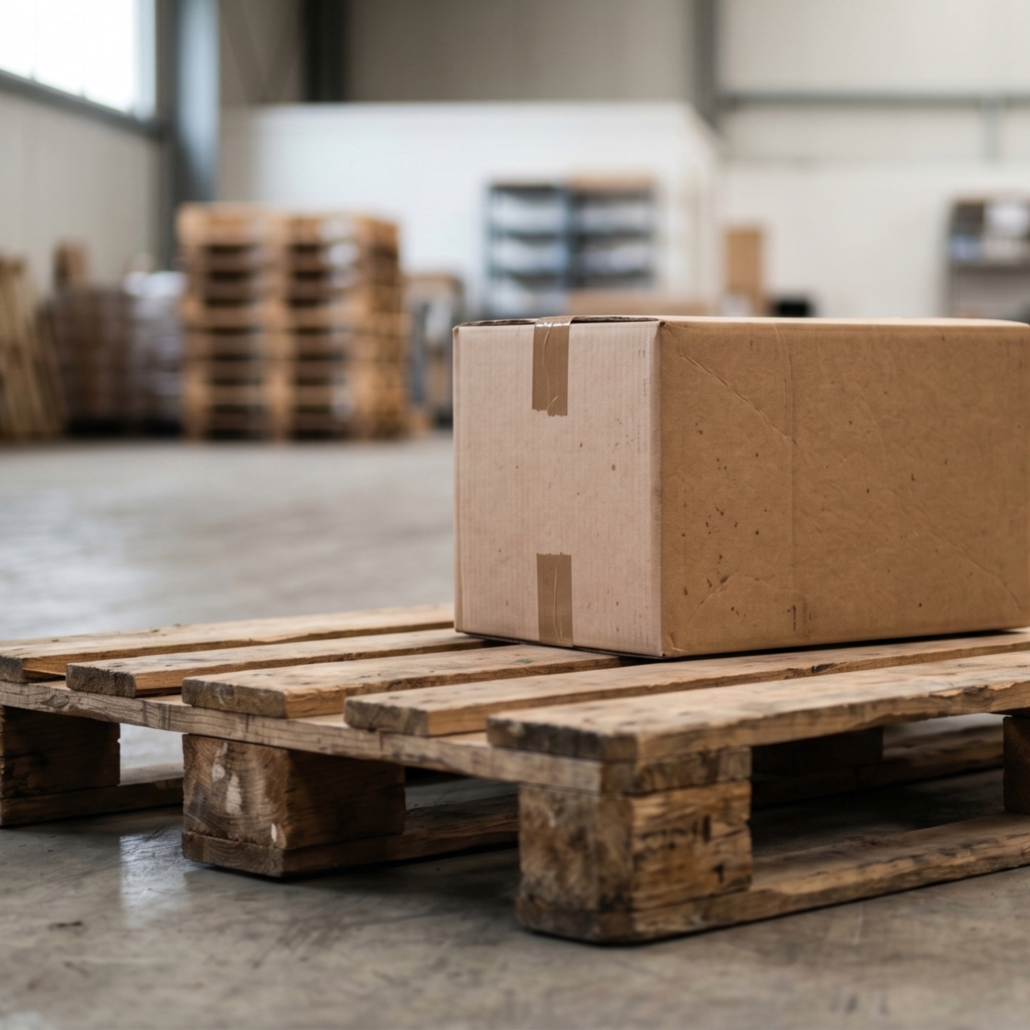
Wood moisture in a shipping container, together with the water held in cardboard and in the goods themselves, is by far the largest source of water on board. The air inside a 20′ container holds less than one kilogram of water vapour, while a single Euro pallet holds several kilograms and can release part of it during the voyage. This is why desiccant bags for containers should be sized on the cargo and its packaging, not only on the volume of air.

The air holds little water

It is often pointed out, correctly, that warm humid air trapped in the container at the port of loading brings water vapour with it. The amount, however, is small: at 30 °C and 90% relative humidity (RH) one cubic metre of air holds about 27 g of water, so the roughly 33 m³ of an empty 20′ container hold about 0.9 kg (about 1.8 kg in a 40′ container). Far more water is held in what is loaded: pallets, crates, cartons and the goods themselves.

Hygroscopic materials and desiccants

A material is hygroscopic when it absorbs and releases water vapour depending on the humidity and temperature of the surrounding air, until it reaches equilibrium (the equilibrium moisture content, meaning the amount of water the material holds steadily at a given temperature and relative humidity). In a closed container it is these materials that set the humidity of the air, not the other way round.

Desiccants are hygroscopic too: the difference lies in how strongly they hold on to the water.

  • Wood, cardboard and natural fibres exchange moisture with the air continuously. When the temperature rises they release it easily, and when the air cools they take it back only slowly, which is why the vapour released in the meantime settles on the coldest surfaces.
  • Desiccants capture moisture even when the air is relatively dry and bind it more strongly. They too can release part of it when the temperature rises, but only at higher temperatures and with more difficulty. In the calcium chloride of Levodry Gel, the water captured forms a solution that remains locked in the gel.

Hygroscopic materials in a container

  • Wood: pallets, crates, cages, dunnage and bracing timber
  • Corrugated board, paper and paperboard
  • Textiles and natural fibres: cotton, wool, jute sacks
  • Leather and hides
  • Agricultural commodities: coffee, cocoa, grain, seeds, tobacco, spices
  • Nylon (polyamide) and some other plastics

How much water the cargo holds

Wood moisture content is expressed as a percentage of the oven-dry mass of the wood: a Euro pallet of about 25 kg at 18% moisture consists of about 21.2 kg of dry wood and 3.8 kg of water. The comparison below is based only on this figure and on the equilibrium values given further on.

Source of waterWater heldWater that can be released
Air in an empty 20′ container (30 °C, 90% RH)about 0.9 kgnot applicable
One Euro pallet, wood at 18%about 3.8 kgabout 1 kg, reaching equilibrium with air at 70% RH (13%)
Eleven Euro pallets (one tier in a 20′ container)about 42 kgabout 11 kg
One pallet made of green (undried) woodover 4.5 kgmost of it, as the wood is far from equilibrium
10 kg of corrugated board (water content 8-14%)up to 1.4 kgabout 0.6 kg, going from 14% to 8%

Figures for green wood and corrugated board come respectively from the Center for Packaging and Unit Load Design at Virginia Tech and from the Transport Information Service (TIS) of the German insurers’ association GDV.

These are theoretical quantities: over a voyage of a few weeks, moisture is exchanged mainly by the surface layer of the wood, so the water actually released depends on the length of the voyage and on temperature swings. The comparison still shows where the excess water in a container comes from: even a single pallet holds more than the air around it.

When wood releases water

The release follows the day and night cycle. During the day the sun heats the steel shell and the air inside, whose relative humidity falls: wood and cardboard, now wetter than the air, give off vapour. At night the ceiling and walls cool first and drop below the dew point (the temperature at which water vapour starts to condense), so the vapour released during the day turns into droplets. Wood reabsorbs moisture from the air only slowly, and the cycle repeats with every temperature swing, particularly when passing between climate zones and during port stays.

Container rain

Condensation forming on the ceiling drips onto the cargo below: this is known as container rain. The droplets wet the top cartons, stain the packaging and create the conditions for mould, even when the container was perfectly dry at departure. The CTU Code, the IMO/ILO/UNECE code of practice for packing cargo transport units, calls for this risk to be taken into account.

Equilibrium moisture content of wood

The table shows the moisture content that wood reaches over time in contact with air at a given temperature and relative humidity. A pallet with a moisture content above the value in the table releases water; one below it absorbs water.

Relative humidity10 °C (50 °F)21 °C (70 °F)32 °C (90 °F)38 °C (100 °F)
90%20.9%20.5%19.8%19.5%
80%16.4%16.0%15.4%15.1%
70%13.4%13.1%12.6%12.3%
60%11.2%11.0%10.5%10.3%
50%9.5%9.2%8.9%8.7%
40%7.9%7.7%7.4%7.2%
30%6.3%6.2%5.9%5.8%
20%4.6%4.5%4.3%4.2%
10%2.6%2.5%2.3%2.3%

Source: Wood Handbook, USDA Forest Products Laboratory, chapter 4, table 4-2. Moisture content on oven-dry basis.

How to read it: a Euro pallet at 18% (about 21.2 kg of dry wood) loaded into a container where the air settles at 70% relative humidity and 21 °C tends to drop towards 13%, releasing about 1 kg of water into the air as vapour. If the air settles at 60% relative humidity, the wood tends towards 11% and the vapour released rises to about 1.5 kg.

What moisture content a Euro pallet should have

The EPAL technical sheet sets dimensions, weight (about 25 kg), materials and heat treatment, but does not specify a moisture content for the wood. The industry reference is the Transport Information Service (TIS) of the German insurers’ association GDV, according to which packaging timber should have a moisture content between 15% and 18%:

  • above 20% moisture and 10 °C, wood becomes susceptible to mould;
  • at 25% moisture, wood has about half the compressive strength it has at 15%, and about two thirds of the bending strength.

For sensitive cargo it is therefore advisable to specify kiln dried (KD) pallets and to check their moisture content with a pin-type moisture meter before loading.

ISPM 15 and moisture

ISPM 15 (International Standard for Phytosanitary Measures No. 15) is the international standard issued under the FAO’s International Plant Protection Convention (IPPC) for solid wood packaging 6 mm thick or more used in international trade. Its purpose is to prevent insects and wood pests from spreading from one country to another. Compliant packaging carries the IPPC mark (the wheat-ear symbol) with the country code, producer code and treatment code, issued under national schemes supervised by each country’s plant protection organisation.

The most common treatment is heat treatment (HT), which brings the wood to at least 56 °C for at least 30 continuous minutes throughout its thickness. ISPM 15 does not deal with moisture: the IPPC explanatory document states that heat treatment may result in little or no moisture reduction, and that heat treated wood may range from green to dry. Kiln drying (KD) is a separate process, designed to reduce moisture, and in turn does not guarantee phytosanitary effectiveness. The same document also notes that heat treatment, by sterilising the wood surface, can promote the growth of surface mould.

The HT mark therefore certifies that the pallet has been treated against pests, not that it is dry: the only way to know its moisture content is to measure it.

Damage caused by excess moisture

  • Mould on pallets, crates, cartons and goods
  • Cartons losing strength and collapsing under the weight of the stack
  • Labels peeling off or becoming illegible
  • Corrosion of metal parts, machinery and components
  • Stains, water marks and warping of wood and packaging
  • Caking of powders and granular products (fertilisers, salt, sugar)
  • Deterioration of agricultural commodities such as coffee, cocoa and grain
  • Musty odours that make goods unsaleable

Protecting the cargo

Since most of the water comes from the cargo, protection starts before departure: pallets and crates made of dried wood, cartons stored in a dry environment, hygroscopic goods at the correct moisture content. Container desiccants complete the system by capturing the vapour the cargo releases during the voyage, so that the dew point of the air stays below the temperature of the walls even through temperature swings.

Levodry Gel and UFI code

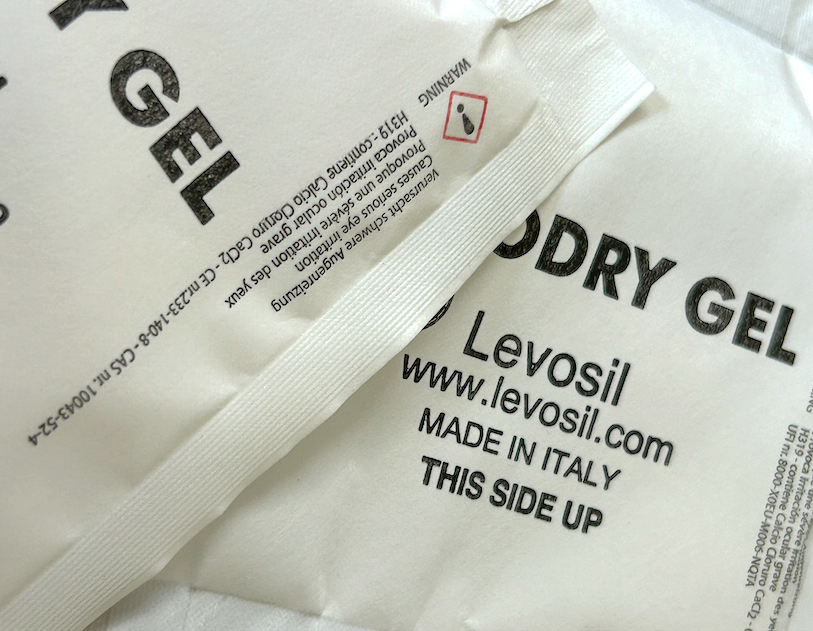
Levodry Gel is a calcium chloride container desiccant. As a mixture classified under the CLP Regulation (Regulation (EC) No 1272/2008), it falls under the UFI requirement (Unique Formula Identifier), a 16-character alphanumeric code that links the product label unambiguously to the information on its composition. The requirement stems from Regulation (EU) 2017/542, incorporated into Annex VIII of the CLP Regulation, and has applied to all hazardous mixtures since 1 January 2025.

The code is used by poison centres: in the event of accidental exposure, it allows them to identify the composition of the mixture quickly and respond appropriately. Notifications are submitted through the ECHA portal and received by the appointed body in each Member State (in Italy, the Istituto Superiore di Sanità).

Levodry Gel has been notified through the ECHA PCN portal and to the ISS, and its labels carry the registered UFI code, available on request for customers’ compliance checks.

Key points

  • The air in an empty 20′ container holds about 0.9 kg of water at 30 °C and 90% RH; a single Euro pallet at 18% moisture holds about 3.8 kg.
  • Wood, cardboard and natural fibres are hygroscopic: they release vapour when the temperature rises and take it back slowly.
  • Desiccants can also release part of their moisture, but only at higher temperatures and with more difficulty.
  • Vapour released during the day condenses on the ceiling at night and drips onto the cargo (container rain).
  • Packaging timber should have a moisture content of 15-18%: above 20% the risk of mould increases.
  • The ISPM 15 (HT) mark certifies treatment against pests, not the moisture content of the wood.
  • Further reading: container protection.

Contact us: +39 011 96 43 430 — info@levosil.com
A desiccant for narrow-neck bottles: Micro Bag Slim

⏱ Reading time: 3 minutes

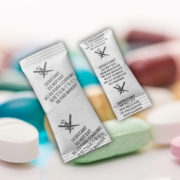
Micro Bags are mainly used to protect capsules, tablets, powders and dry food and pharmaceutical products from moisture. The standard format, 25 mm wide, covers most packaging requirements. But not every bottle has a neck that wide, and a desiccant for narrow-neck bottles has to fit through the opening.

This is why Levosil also produces the Micro Bag in the Slim format, with a 19 mm short side, so that it can be inserted into bottles with a narrow opening.

Three widths

The Micro Bag is available in three widths:

  • 25 mm, the classic format, always available in all weights.
  • 19 mm Slim version, designed for bottles with a small opening, in 0.5 g, 1 g and 2 g weights.
  • 22 mm, intermediate width, produced on request.

Standard weights range from 0.25 g to 6 g. But custom sizes and weights can be produced to customer specification, in all widths.

Three desiccants, according to the adsorption requirement

Micro Bags are available with Silica Gel, Activated Clay or Molecular Sieve. None of the desiccants used to produce Levosil desiccant bags are hazardous or subject to labelling.

All desiccant materials work by removing excess moisture from the air and trapping water vapour inside themselves, safely and permanently. They do not alter the organoleptic properties of food and do not cause chemical changes to active ingredients.

On request, Levosil also produces tailored desiccant blends for specific adsorption requirements.

Tyvek or FSC paper wrapping

The most common wrapping is Tyvek (spunbonded polyethylene), water vapour permeable and dust proof, compliant with the functional barrier requirements of Regulation (EC) 450/2009. The same performance can also be guaranteed with a certified FSC paper wrapping, suitable for direct food contact, for those looking for an alternative to plastic.

Pharmaceutical, nutraceutical, food

The Micro Bag is manufactured in conformity with ISO 15378 and, for pharmaceutical use, is supported by a Type III Drug Master File.

For food contact, the Micro Bag complies with Article 3 of Regulation (EC) 1935/2004 and with Regulation (EU) 10/2011; the desiccant material meets USP chapter 670. Levosil is also registered with the competent local health authority (ASL, through the SUAP portal) under Article 6 of Italian Legislative Decree 29/2017, as a manufacturer of materials and articles intended to come into contact with food (MOCA).

The shape and the colour of the Micro Bag clearly distinguish it from the packaged product, reducing the risk of mix-up with capsules, tablets or other goods.

The printing on the Micro Bag complies with European regulations and, in the unconstrained area, can be customised to meet customer requirements.

In a few words:

  • 25 mm width for standard use, Micro Bag Slim (19 mm) for narrow-neck bottles, 22 mm on request.
  • Weights from 0.25 g to 6 g; custom sizes and weights available to customer specification.
  • Silica gel, activated clay or molecular sieves, according to the adsorption requirement.
  • Compliance with ISO 15378, Type III Drug Master File, Regulation (EC) 1935/2004, Regulation (EU) 10/2011, USP 670, MOCA registration with the competent ASL.
  • Also available with FSC® wrapping with compostable bioplastic.

You can contact us now for more information: 0039 011 96 43 430 + info@levosil.com

Molecular sieves: selective moisture adsorption

⏱ Reading time: 3 minutes

Molecular sieves: selective moisture adsorption and high-temperature resistance

Molecular sieves are synthetic zeolites with calibrated porosity, used to produce desiccant bags for special applications where silica gel or activated clay are not suitable. Types 4A and 3A are the ones normally used for moisture adsorption.

Their use makes sense in two cases: when the environment contains other gases that must not be removed together with the moisture, and when moisture must be adsorbed and retained even at high temperatures. Outside these cases, silica gel or activated clay offer equivalent performance and are easier to handle.

Structure: why adsorption is selective

A molecular sieve is an aluminosilicate with a three-dimensional structure of channels and cavities of regular size. The pore opening determines which molecules can enter and be retained: 3A and 4A sieves adsorb only sufficiently small, polar molecules, such as water.

This regularity is the key difference from silica gel and activated clay, which are non-selective adsorbents: they retain moisture, but also other gases present in the air.

High-voltage switchgear

The application where selectivity is essential is high-voltage switchgear insulated with gas (arc-quenching gas). Here the goal is to remove residual moisture without removing the insulating gas: a non-selective desiccant would adsorb both, altering the composition of the gas and its function. Thanks to its calibrated pores, the molecular sieve solves this specific problem.

High-temperature performance

Unlike the other desiccants used in industrial packaging, molecular sieves adsorb and retain moisture even at high temperatures. Silica gel and activated clay begin to lose effectiveness at around 50 °C; the molecular sieve maintains good desiccant capacity even above 120 °C.

Its regeneration temperature exceeds 300 °C: even at very high temperatures, the material does not release the adsorbed moisture. For the same reason, under normal conditions a molecular sieve is practically impossible to regenerate.

Why they are not used for container protection

In shipping containers, the problem is absorbing large quantities of moisture at ambient temperature: neither selectivity nor heat resistance is needed. The right solution is calcium chloride (Levodry Gel).

Pharmaceutical applications

Molecular sieves are often used in the pharmaceutical sector, but in most cases they offer no real advantage over silica gel. The performance of molecular sieve and silica gel is practically identical (both materials have a desiccant capacity of 20% of their weight under standard test conditions of 40% relative humidity and 23 °C). A molecular sieve may be useful when moisture, but not other gases, must be removed inside the drug package, but these cases are very rare.

It is often pointed out, correctly, that molecular sieves adsorb moisture faster than other desiccants. Under normal conditions and in small packages, however, the difference is barely measurable.

In short

  • Molecular sieve = synthetic zeolite (typically 3A or 4A) with calibrated porosity and selective moisture adsorption.
  • Use it when moisture must be removed without capturing other gases, and when moisture must be retained at high temperatures (active at 120 °C, regeneration above 300 °C).
  • Not needed in containers: the right solution is calcium chloride (Levodry Gel).
  • In pharmaceutical applications, adsorption performance is comparable to silica gel; the speed advantage is marginal.
  • Our technical team is available to recommend the most suitable desiccant for the result you need to achieve.

You can contact us now for more information: 0039 011 96 43 430 + info@levosil.com

How to handle desiccants

⏱ Reading time: 4 minutes

A desiccant sachet is considered “expired” when it has adsorbed all the moisture it can hold: at that point, it stops working.

The speed at which it saturates does not depend on chemical degradation of the material, but on how much moisture it encounters.

In a well-sealed package, with little incoming moisture, the same sachet can protect the contents for months. In a permeable package, or one filled with damp materials, it can be exhausted within a few days.

The desiccant does not expire. It saturates.

You might be tempted to look for an expiration date, as on a yogurt pot. But silica gel and activated clay do not chemically degrade over time: they adsorb water vapour until they reach their maximum capacity, then they stop.

The right question, then, is not “how long does the desiccant last”, but “how much moisture will reach the desiccant, and how quickly?”.

The packaging determines the duration

The desiccant sachet always works together with the packaging. Its job is to remove the moisture contained inside the packaging and capture the moisture that penetrates from outside over time.

If the barrier material enclosing the desiccant sachet and the goods to be protected lets large amounts of moisture through, the desiccant will saturate quickly.

The key parameter is the water vapour permeability of the packaging material (indicated on technical datasheets as WDD or WVTR, in g/m² per day): the more permeable the barrier, the more moisture enters each day, the sooner the desiccant saturates.

For this reason it is essential to always use quality barrier materials, suitable for the intended purpose and for the protection duration required.

The hidden moisture inside the packaging

There is also the moisture that the packaging itself already contains from the start. Pallet wood, cardboard, paper fillers: they are all hygroscopic materials that hold water and release it slowly into the air inside the package.

Never place damp materials inside the packaging. Every gram of water contained in wood or cardboard is a gram the desiccant will have to adsorb: capacity wasted from the start.

How long it lasts, in numbers: calculation according to DIN 55474

Estimating the required amount of desiccant — and therefore the duration of protection — is not done by eye: the DIN 55474 standard provides the calculation formula. But the formula only works if you have all the data. Here they are:

  • V — internal volume of the packaging (m³)
  • b — moisture contained in the internal air at closure (g/m³)
  • m — mass of hygroscopic materials inside the packaging: wood, cardboard, fillers (kg)
  • c — moisture content of these materials (g/kg)
  • A — surface area of the barrier packaging (m²)
  • WDD — water vapour permeability of the barrier material (g/m² · day)
  • t — required protection duration (days)
  • a, e — factors defined by the standard: adsorption capacity per desiccant unit and climatic correction factor

The result is the number of DIN desiccant units to insert in the packaging to guarantee protection for the entire time t.

We must accept that industrial packaging always has some water vapour permeability, whether higher or lower.

If the quantity resulting from the DIN calculation is correctly applied, you have the guarantee that the packaging will be preserved for the desired duration.

DIN 55474 applies to desiccants used inside packaging. For sizing desiccants used inside shipping containers, the reference is the CTU Code: we have covered this in a dedicated article.

In practice

  • The desiccant does not expire: it saturates as a function of the moisture it encounters.
  • Duration is determined by the packaging: a barrier is needed to isolate both the goods and the sachet from the outside environment.
  • Check the water vapour permeability (WDD) of the barrier material: this is the parameter that governs how much moisture enters each day. A low moisture barrier will require a larger number of desiccant sachets; a very high moisture barrier (such as aluminium Triplex) will require a smaller quantity.
  • No damp materials inside the package: wet wood and cardboard consume the desiccant before its time.
  • To calculate quantity and duration, use DIN 55474, with all the required data: without them, any estimate is a gamble.

If you would like to give us a call, we will handle the calculation for you: 0039 011 96 43 430 — info

Why do industry standards matter to customers?

⏱ Reading time: 4 minutes

How is the adsorption capacity of a desiccant determined?

The adsorption capacity of a desiccant is determined in the laboratory by exposing the material to air at controlled temperature and relative humidity, and measuring how much water it retains at equilibrium. The result always depends on the test conditions: the same product adsorbs very different amounts of moisture depending on the climate it is exposed to. This is why the DIN 55473 and MIL-D-3464E standards define fixed test conditions, allowing desiccant bags to be compared on a single, equal basis across all manufacturers.

Why do industry standards matter to customers?

Desiccant bags used inside packaging (inside boxes, to put it simply) are generally produced with three desiccant materials:

  • Silica gel: a synthetic desiccant, the most widely used in pharmaceutical and food applications.
  • Activated clay (sometimes referred to as “expanded clay”, which has nothing to do with it): a natural desiccant, suitable for most industrial applications.
  • Molecular sieves: zeolites with calibrated pores, for applications requiring selective adsorption of moisture only, or the ability to remove moisture even at high temperatures (this product also deserves a dedicated in-depth document, as it is not widespread and little known).

As we will see, the capacity of all desiccants varies with the temperature and relative humidity conditions in which they are used, which is why technical standards have been created over the years to regulate their use, production and testing methods. These standards are a useful tool for the customer: in a landscape where extravagant claims about desiccant properties are the norm, they make it possible to understand exactly how to evaluate the various products.

The most active standard today is DIN 55473.

Capacity depends on the test conditions

A desiccant has no “absolute” absorption capacity. The amount of water it can retain at equilibrium depends on two variables: the temperature and the relative humidity of the surrounding air. Strictly speaking, it also depends, to a very small extent, on atmospheric pressure, but this can be neglected under normal conditions of use. The higher the relative humidity, the more water the material adsorbs. Temperature works in two directions: it increases the capacity of the desiccant but, as it approaches the regeneration temperature of the material, it starts releasing moisture back into the environment, reducing the capacity until it is cancelled out completely.

Example: 100 g of silica gel in two different climates

  • At 23 °C and 40% relative humidity, 100 g of silica gel adsorb approximately 24 g of water vapour (typical value).
  • At 23 °C and 80% relative humidity, the same 100 g adsorb approximately 35 g (typical value).

Same product, same quantity: the figure changes only because the test conditions change. A capacity value without the corresponding temperature and relative humidity means nothing.

In practice, if a manufacturer tells you that their silica gel desiccant bag (a manufacturer of this kind would probably call it a “salt”) is better than the competition’s because theirs absorbs 35 g, it means they do not know, or fail to tell you, that their test was carried out — assuming they actually ran it and did not just copy figures from the internet — at a higher relative humidity, and that those 35 g are merely the performance of silica gel under extreme relative humidity conditions.

The standard is a guarantee for the customer

Standards define the exact test conditions, so that buyers can compare products on a single, equal basis.

  • DIN 55473: defines the desiccant unit (DU) as the quantity of material that, at equilibrium with air at 23 °C (±2 °C), adsorbs at least 3.0 g of water vapour at 20% relative humidity and 6.0 g at 40%.

Two bags declared as “1 unit” under the same standard therefore guarantee the same minimum performance, regardless of manufacturer or adsorbent material.

The DIN standard also defines how desiccant bags must be packed: another topic we will cover separately, as it deserves proper attention. For now, let us just say that Levosil delivers its products packed in HDPE to prevent them from becoming partially saturated before use, which would reduce their drying capacity. Attention is often focused on performance figures, while how to preserve that performance over time is overlooked. Levosil guarantees a two-year shelf life on its products.

Why testing is carried out at 23 °C and 40% relative humidity

Test conditions at low relative humidity are not an arbitrary choice: they measure the water that is actually retained.

Moisture adsorbed at 20-40% relative humidity is stably bound within the finest porosity of the granule and is not released back into the packaging. In contrast, the water absorbed in a test at 80% relative humidity is partly held weakly, through capillary condensation in the larger pores: if the relative humidity of the environment drops, that extra share is easily released.

A value measured at 80% relative humidity is therefore an impressive figure, but it does not represent the real protection the desiccant provides inside the packaging. Before comparing two datasheets, always check that the test conditions are declared and identical.

Besides, you had better hope your packaging never reaches 80% relative humidity, because at that point whether the silica gel performs at 24 or 35 per cent would be the least of your problems…

What about calcium chloride container desiccants?

The same principle applies to calcium chloride desiccant bags used inside shipping containers. Here too, fanciful and optimistic claims circulate on the web and need to be analysed to be fully understood. It is worth noting that the proliferation of “optimistic” manufacturers regarding the performance of their product has been largely encouraged by the lack of an industry standard for these materials.

We will dedicate a specific publication to this topic.


If you want to make sense of all this: 0039 011 96 43 430 — info@levosil.com
CTU Code > Levodry

⏱ Reading time: 4 minutes

CTU Code and Levodry Gel: compliant desiccant bags for container protection

Yes, Levosil’s Levodry Gel complies with the CTU Code recommendations on humidity control inside containers. The calcium-chloride-based desiccant bags of the Levodry Gel range keep the internal relative humidity of the container below the 60% safety threshold, in line with Annex 3 of the CTU Code for reaching the “container-dry” state.

What the CTU Code is

The CTU Code (Code of Practice for the Packing of Cargo Transport Units) is the code of practice jointly published by IMO (International Maritime Organization), ILO (International Labour Organization) and UNECE (United Nations Economic Commission for Europe). It was endorsed in 2014, as an update of the previous 1997 Guidelines.

The supporting informative material is published as IMO circular MSC.1/Circ.1498.

The CTU Code is not a mandatory regulation: it is a set of global recommendations, adopted as an international reference by freight forwarders, insurance companies, customs authorities and used in many countries as a basis for national legislation on cargo transport in containers.

It covers all transport modes of cargo transport units: maritime, road and rail.

What the CTU Code says about humidity in containers

Humidity control is addressed in Annex 3 of the CTU Code and further discussed in the informative material MSC.1/Circ.1498.

The key points are:

  • the cargo should be brought to the “container-dry” state before stowing, meaning a moisture content that does not release harmful amounts of water vapour during transport;
  • when pre-drying of the cargo is not sufficient, the use of desiccant bags is recommended to absorb the excess moisture;
  • risk thresholds are defined for the internal relative humidity (RH) of the container.

Relative humidity thresholds indicated by the CTU Code

Relative humidityRisk
≥ 40%Corrosion of ferrous metals
≥ 75%Mould growth on wood, food, textiles and hygroscopic goods
< 60%Level considered safe, with a margin against temperature variations

The RH below 60% value is indicated as the reference condition to prevent condensation (the so-called “container rain”) even in the presence of strong day/night temperature swings during maritime transport.

What container rain is and why it matters

Container rain is the phenomenon where the water vapour in the internal air of the container condenses on the walls and ceiling during nighttime cooling, then drips back on the cargo as actual rainfall. Consequences include:

  • corrosion of metal parts;
  • mould and fungal growth;
  • collapse of cardboard packaging;
  • stains, halos and packaging discolouration;
  • deterioration of hygroscopic products (coffee, cocoa, textiles, wood, dry food).

Even a few condensation cycles can cause irreversible damage.

How Levodry Gel ensures compliance with the CTU Code

Levodry Gel is a container-specific desiccant bag formulated with a mixture of calcium chloride and a gelling agent. Its technical features make it fully compliant with the CTU Code recommendations:

  • Absorption capacity up to 300% of its own weight: it captures the water vapour released by the cargo and packaging materials throughout the entire maritime transport.
  • Keeps the internal RH below 60%: it operates in the 40%–60% relative humidity window, exactly the range indicated by the CTU Code as safe.
  • Moisture-to-gel transformation: the gelling agent locks in the absorbed water, preventing any liquid from leaking out of the bag and contaminating the cargo.
  • Flexible formats: available in blankets, hook chains and single bags with PE side, suitable for standard dry containers, reefer containers and different loading configurations.
  • Regulatory safety: REACH-registered (Regulation EC 1907/2006), notified under EU Regulation 2017/542 (UFI) via the ECHA PCN portal and the Italian ISS, DMF-free according to Decision 2009/251/EC, free from SVHC substances.
  • Food-contact safe: suitable for the protection of food shipments and raw materials intended for human consumption.
  • FCC Guidelines compliant for the shipment of cocoa beans in containers.

How to size Levodry Gel correctly for a container

Sizing of Levodry Gel for a container is not covered by any standard: the correct quantity is determined by Levosil based on the technical experience gained since 1964 and on tests carried out in the internal climate chamber, considering several factors:

  • internal container volume (20′, 40′, 40′ HC);
  • voyage duration and route;
  • cargo type (hygroscopic or non-hygroscopic);
  • presence of wooden pallets and other materials releasing moisture;
  • possible use of plastic barrier covers or VCI films on the cargo.

Levosil provides direct technical support to recommend the optimal quantity on a case-by-case basis.

Further reading

For further information on the regulatory compliance of Levodry Gel:

The UFI code of Levodry Gel is notified via the ECHA PCN portal and the Italian ISS, and is available on request for B2B use.

Contact

You can contact us now for more information: 0039 011 96 43 430 — info@levosil.com

Levosil desiccant bags are compliant with MIL-D-3464

Short answer

Yes. Levosil desiccant bags filled with silica gel and activated clay comply with the U.S. military specification MIL-D-3464E (Desiccants, Activated, Bagged, Packaging Use and Static Dehumidification), in Type I (clay) and Type II(silica gel) configurations.

Compliance is possible because our bags use adsorbent, non-deliquescent desiccants, as required by clause 3.2.1 of the standard. The Levodry Gel (calcium chloride based) meets a different requirement — protection of goods inside shipping containers — and, by its chemical nature, falls outside the scope of MIL-D-3464.


What MIL-D-3464E requires

MIL-D-3464E, issued by the U.S. Department of Defense in 1987, defines the requirements for bagged desiccants used in military and industrial packaging to prevent corrosion and mildew in enclosed spaces.

Key requirements of the standard:

  • Non-deliquescent material (clause 3.2.1): the desiccant must not liquefy upon water uptake.
  • Minimum adsorption capacity: 3.00 g of water vapor at 20% RH and 6.00 g at 40% RH, per desiccant unit, at 25 °C.
  • Maximum unit weight: 50 g per unit.
  • Reactivation: after regeneration at 118.3 °C, the bag must retain at least 90% of its original capacity.
  • Three classifications:
    • Type I — general purpose (typically clay)
    • Type II — non-dusting (typically silica gel in Tyvek®)
    • Type III — specific conditions (8 and 16 units only)

Why silica gel complies and calcium chloride does not

The technical distinction is chemical and relates to how the material captures moisture.

Adsorption (silica gel, clay, molecular sieves)

Water vapor is trapped on the porous surface of each granule by physical forces. The material remains solid, dry, non-deliquescent. It can be regenerated in an oven. It meets clause 3.2.1 of MIL-D-3464E.

Absorption (calcium chloride)

Calcium chloride is deliquescent: it captures moisture and turns into a saline liquid solution, retained inside the bag by a gelling matrix and impermeable envelope. Its absorption capacity is much higher than silica gel (up to 300% of its weight), but it does not satisfy the non-deliquescence requirement of MIL-D-3464E.

This is why Levodry Gel is designed for a different reference standard: DIN 55474 (protection of goods in shipping containers) and container rain prevention practices.


Levosil compliance matrix by product family

ProductDesiccantMIL-D-3464EDIN 55473REACHUFI / CLP
Desiccant bagsSilica gel✓ Type II✓ Type A/B/Tyvek®✓Not required
Desiccant bagsActivated clay✓ Type I✓ Type A/B✓Not required
Desiccant bagsMolecular sieves–✓✓Not required
Levodry GelCalcium chlorideOut of scope (deliquescent)–✓✓
Pharma Micro BagSilica gel / sieves✓ Type II✓ Tyvek®✓Not required

The UFI (Unique Formula Identifier) is mandatory since 1 January 2021 under Regulation (EU) 2017/542 and Annex VIII of the CLP, but only for mixtures classified as hazardous. Levodry Gel is notified through the ECHA PCN portal and the Italian ISS. Silica gel, clay and molecular sieve bags do not require UFI notification because they are not hazardous mixtures under the CLP.


What “MIL-D-3464 compliant” means in practice

A MIL-D-3464 compliant bag must guarantee four things:

  1. Measurable performance — adsorption verified under standard conditions.
  2. Chemical safety — non-deliquescent, non-corrosive toward steel, brass, aluminum, magnesium (clause 3.11).
  3. Reusability — reactivable by oven drying.
  4. Traceability — labeling that identifies nomenclature, specification, type, number of units, reactivation temperature and time, manufacturer.

Levosil has been manufacturing bags that meet these characteristics since 1964, from its plant in Chiusa di San Michele (Turin, Italy), with ISO 9001 and ISO 15378 (pharmaceutical primary packaging) certifications.


Levosil’s complete regulatory set

Levosil is among the few European desiccant bag manufacturers covering the full regulatory spectrum:

  • MIL-D-3464E (U.S. military specification) — silica gel and clay bags
  • DIN 55473 (German packaging desiccant standard) — Type A and B
  • DIN 55474 (desiccant sizing for maritime packaging) — Levodry Gel
  • REACH (EC Regulation 1907/2006) — all raw materials
  • UFI / CLP (EU Regulation 2017/542, CLP Annex VIII) — Levodry Gel notified
  • ISO 9001 (quality) and ISO 15378 (pharmaceutical GMP primary packaging)
  • FSC® Chain of Custody — certified paper for envelopes
  • DMF-free (Commission Decision 2009/251/EC) — declaration of conformity available

How to request the MIL-D-3464 declaration of conformity

The MIL-D-3464E declaration of conformity for Levosil bags is issued upon request, referenced to the production lot. It includes desiccant type, number of units, verified adsorption capacity, recommended reactivation temperature and time, and envelope information (Type A, Type B, Tyvek®).


You can contact us now for more information: 0039 011 96 43 430
📧 info@levosil.com

Desiccant and PPWR

⏱ Reading time: 5 minutes

PPWR and Desiccant Bags: What Changes for Levosil

The Regulation (EU) 2025/40 on packaging and packaging waste (PPWR) is a very broad piece of legislation, designed to regulate the life of packaging as a whole. Because of this breadth, it inevitably leaves some room for interpretation for niche products that make up only a tiny share of the packaging market. Among these are desiccant bags.

Desiccant bags are not packaging in the traditional sense. In addition, there is currently no dedicated recycling chain for desiccants, since the quantities involved do not justify one, nor is there an eco-labelling system designed specifically for these products. These elements support the view that desiccant bags may fall outside the scope of the PPWR.

To obtain a definitive view, Levosil has requested a direct opinion from the European Commission’s Directorate-General for Environment. Pending an official reply, the current position is that desiccant bags would not be subject to the PPWR. They remain, however, compliant with the part of the Regulation currently in force, in particular the substance requirements under Article 5.

Timing

As a general overview, the PPWR was published in the Official Journal of the European Union on 22 January 2025 and entered into force on 11 February 2025. It applies generally from 12 August 2026 and replaces Directive 94/62/EC. The main purpose of the European packaging regulation is to reduce the environmental impact of packaging waste by promoting a circular economy.

Levodry Gel and its classification.

The Levodry line, based on calcium chloride, would in any case follow different end-of-life rules: spent material falls under the general waste framework, not packaging waste streams. The Levodry bag still complies with the substance requirements of Article 5, regardless of the final classification outcome.

What if I use the desiccant bag inside a product?

If the bag is permanently inserted inside a product as an integral part for its entire life cycle — for example, housed permanently in equipment or a lamp — it is not considered packaging. In that configuration, the PPWR does not apply.

Timeline

  • 11 February 2025: entry into force of the Regulation.
  • 12 August 2026: general application; PFAS limits for food-contact packaging under Article 5(5).
  • 1 January 2028: delegated acts on recycling design criteria and recyclability classes.
  • 12 August 2028: harmonised labelling on material composition.
  • 1 January 2030: obligation for recyclability in class A, B, or C; minimum recycled content in plastic parts; minimum reduction in weight and volume.

Levosil is already compliant with Article 5 of the PPWR

Regardless of the classification outcome, Levosil confirms the compliance of all its desiccant bags with the substance requirements of Article 5. The sum of lead, cadmium, mercury, and hexavalent chromium is below 100 mg/kg (100 ppm). All products are PFAS-free, and the limits applicable from 12 August 2026 are already respected for all applications. All products are free from bisphenol A (BPA), and Levosil does not use silica gel with cobalt chloride indicator.

The sizing of Levosil bags is also optimized according to DIN 55473 and DIN 55474. The amount of desiccant is calculated on the actual adsorption requirement, without excess, in line with the principle of minimizing packaging where applicable.

You can contact us now for more information: 0039 011 96 43 430

info@levosil.com

REACH and Desiccants

REACH and desiccants

Levosil has been compliant with the REACH regulation since it entered into force in 2007, managing registration, traceability and documentation of its desiccants according to European requirements.


What is the REACH regulation

REACH (EC 1907/2006) governs the use of chemical substances in the European Union.
It has been in force since 2007 and requires registration with ECHA of substances produced or imported in quantities above 1 tonne per year.


Desiccants under REACH

Common desiccants used in packaging — including silica gel, calcium chloride and molecular sieves — fall within the REACH framework.

In practice:

  • registration is required above 1 ton/year
  • safety data and traceability must be available throughout the supply chain

One important exception:

  • natural clay not chemically modified is exempt (Annex V – Entry 7)

Risks of non-compliance

Non-compliance with REACH has consequences across the entire supply chain.

For producers and importers:

  • customs blocking of goods
  • market withdrawal
  • financial penalties (defined at national level)
  • legal liability and reputational damage

For users:

  • possession of non-compliant products in the EU market
  • traceability issues
  • potential liability within the supply chain

REACH status of main desiccants

DesiccantREACH statusObligation
Silica gelSubject to registrationYes, above threshold
Calcium chlorideSubject to registrationYes, above threshold
Molecular sieveSubject to registrationYes, above threshold
Natural clayExempt (if not modified)No

Compliance and documentation

To meet REACH requirements, products must:

  • be registered when required
  • include updated Safety Data Sheets (SDS)
  • be fully traceable in terms of origin and quantity

Levosil applies these requirements across its product range, in line with European regulations and quality standards.e 1 tonne/year, while natural clay may be exempt. Compliance ensures safety and continuity across the supply chain.

UFI mandatory on labels: Levodry Gel is already compliant

What the UFI is and what it does

The UFI (Unique Formula Identifier) is a unique alphanumeric code, made up of 16 characters, that must be printed on the product and on its label. Its purpose relates to health and safety: it unequivocally links information on the composition of a mixture to a specific product placed on the market. In the event of accidental exposure, it allows poison centres to quickly retrieve information on the composition and toxicology of the mixture by consulting the European database that associates each UFI code with the information notified through ECHA.

Who keeps the UFI database?

The UFI does not exist on its own: it is linked to a PCN notification (Poison Centre Notification). ECHA provides a centralised portal (the ECHA submission portal) for notification to poison centres. In Italy, the Istituto Superiore di Sanità (ISS) is the body designated to receive the information — including the chemical composition — relating to mixtures classified as hazardous. This information makes up the Archive of Hazardous Preparations (Archivio dei Preparati Pericolosi, APP), which poison centres can consult in an emergency.

The UFI refers to a single product and is “personal”

Every UFI code is personal and non-transferable: because it is built from the VAT number of the company placing the product on the market and from a specific formulation number, it unequivocally links a given mixture to the party responsible for it. Products with a different composition have different UFIs, and every change in the formula corresponds to a new code. It should be stressed, however, that the code cannot be used to trace the composition of the mixture or any other confidential data: the UFI is not decodable, and the information associated with it is held in a database accessible exclusively to poison centres and healthcare facilities, in the event of an emergency. For this reason, its presence on the label in no way exposes resellers or those who market the product; it represents solely a guarantee of safety and compliance.

Reference legislation and obligations for those placing the product on the market

The UFI originates from Regulation (EU) 542/2017, which was incorporated into Annex VIII of the CLP Regulation 1272/2008. It is not an option but a legal obligation: companies that place hazardous mixtures on the market must transmit the necessary information to the competent national bodies, so that poison centres can rapidly provide medical advice in an emergency. The parties subject to the obligation are importers and downstream users who, in the course of industrial and professional activities, place on the market mixtures that are hazardous to health and/or present physical hazards. Failure to comply with the obligation may result in products being withdrawn from the market and in financial penalties, with possible inspections by the competent authorities.

Since when it has been mandatory to display it on the product

The final deadline has now passed: since 1 January 2025, the UFI on the label has been mandatory for all hazardous mixtures marketed within the European Economic Area, without exception. The obligation also applies to mixtures already placed on the market before that date.

The case of calcium chloride desiccants

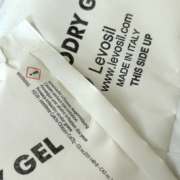
The classification of calcium chloride — the main component of all desiccants used to protect containers, Levodry Gel included — is the reason why the irritant symbol and the information required by law are printed on the label and on the product itself. Under normal conditions of use, no contact is expected between the person using the desiccant bag and the calcium chloride contained inside it; this does not, however, relieve the manufacturer and the party placing the product on the market of the obligation to indicate the presence of a potentially irritant substance inside the packaging.

Desiccant bags based on calcium chloride, such as Levodry Gel — which contains between 60% and 90% of it — are classified as irritant (eye irritation category 2, H319 – “Causes serious eye irritation”) under the CLP Regulation. They therefore fall fully within the scope of the mixtures subject to the obligation. For this reason they must be notified through ECHA’s PCN portal and, for Italy, registered with the Istituto Superiore di Sanità (ISS). Only after this registration is the UFI code generated, validated and affixed to the product. Once these formalities have been completed, the product can be placed on the market.

It is important to note that a product requiring any hazard classification cannot be placed on the market unless the UFI code has been registered.

Product safety

It is essential to understand that, in the case of Levodry Gel, the calcium chloride is contained within a functional barrier, and therefore in normal working operations the user is not expected to come into direct contact with the calcium chloride. Nevertheless, the law requires that the product be labelled and that the UFI code be registered with the competent authority as a precaution, in case of improper use or of leakage of the calcium chloride should the outer casing break.

Where the code must appear: label and product

The UFI must be physically present on the product and on its label, printed or affixed in a visible, legible and indelible manner, preceded by the letters “UFI”, which are not to be translated into the various languages.

Levosil has already done everything

Levodry Gel has its own code duly stated in the Safety Data Sheet and affixed to the product label, in full compliance with the CLP Regulation and its Annex VIII. Notification to the poison centres has been carried out, and the emergency contact details are indicated in every language version of the sheet. Choosing Levosil means purchasing products that are already compliant, with no risk of non-conformity for those who resell them or place them on the European market in turn.