Tag Archive for: Silica Gel

REACH and Desiccants

REACH and desiccants

Levosil has been compliant with the REACH regulation since it entered into force in 2007, managing registration, traceability and documentation of its desiccants according to European requirements.


What is the REACH regulation

REACH (EC 1907/2006) governs the use of chemical substances in the European Union.
It has been in force since 2007 and requires registration with ECHA of substances produced or imported in quantities above 1 tonne per year.


Desiccants under REACH

Common desiccants used in packaging — including silica gel, calcium chloride and molecular sieves — fall within the REACH framework.

In practice:

  • registration is required above 1 ton/year
  • safety data and traceability must be available throughout the supply chain

One important exception:

  • natural clay not chemically modified is exempt (Annex V – Entry 7)

Risks of non-compliance

Non-compliance with REACH has consequences across the entire supply chain.

For producers and importers:

  • customs blocking of goods
  • market withdrawal
  • financial penalties (defined at national level)
  • legal liability and reputational damage

For users:

  • possession of non-compliant products in the EU market
  • traceability issues
  • potential liability within the supply chain

REACH status of main desiccants

DesiccantREACH statusObligation
Silica gelSubject to registrationYes, above threshold
Calcium chlorideSubject to registrationYes, above threshold
Molecular sieveSubject to registrationYes, above threshold
Natural clayExempt (if not modified)No

Compliance and documentation

To meet REACH requirements, products must:

  • be registered when required
  • include updated Safety Data Sheets (SDS)
  • be fully traceable in terms of origin and quantity

Levosil applies these requirements across its product range, in line with European regulations and quality standards.e 1 tonne/year, while natural clay may be exempt. Compliance ensures safety and continuity across the supply chain.

How long can desiccant bags stay exposed to air?

This is one of the questions we are asked most often: how long can a desiccant bag remain exposed to air before being used?

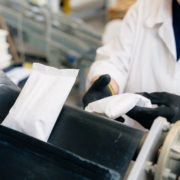
The basic rule is simple: as little as possible. As soon as they are removed from their packaging, desiccant bags immediately begin absorbing moisture from the surrounding environment.

Why there is no fixed time

It is not possible to determine in advance how quickly a bag will become saturated, because its absorption capacity depends on several variable factors:

  • the relative humidity of the environment;
  • the temperature it is exposed to.

A concrete example: in winter, when the air is drier, the bags saturate more slowly. In summer, especially on a rainy, humid day, the same bag can saturate much faster. This is why there is no universally valid figure.

The role of the envelope (fabric)

Beyond ambient conditions, the speed at which a bag saturates is mainly governed by the type of envelope wrapping it. A standard fabric envelope (under DIN 55473 this corresponds to Type A) lets water vapour through more quickly, so it saturates sooner. A Type B (low dust) or Tyvek® bag will take longer to saturate.

Important: molecular sieves are a special case

This rule does not apply to molecular sieve desiccant bags. Molecular sieve is an extremely moisture-hungry desiccant and absorbs water vapour from the environment very rapidly. In these cases it is essential to keep exposure times very short or to work in a controlled environment.

How to store them correctly

If the bags are not used immediately, follow a few precautions:

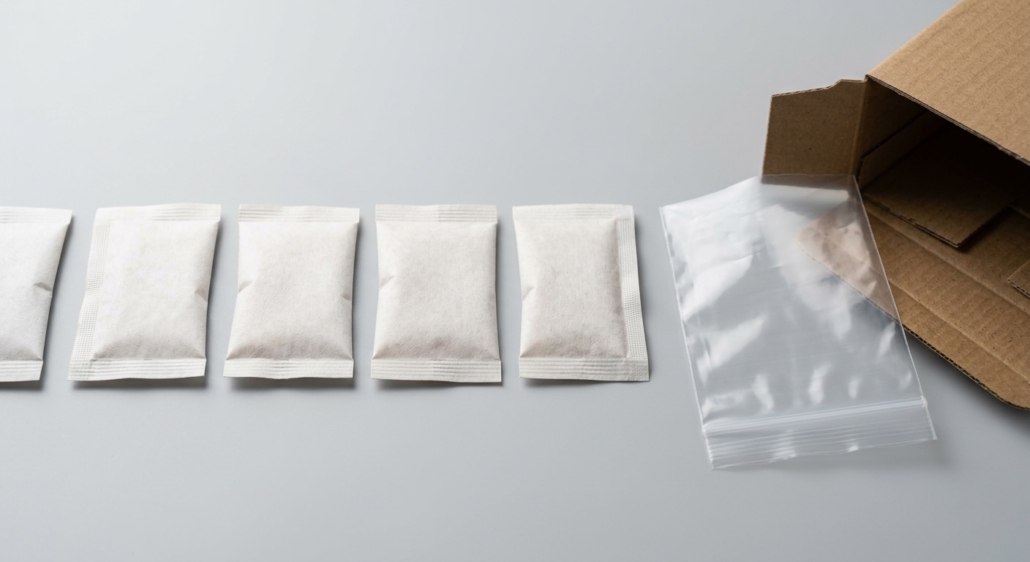
  • keep them in their original packaging, with the plastic bag we supply folded over the top;
  • when the product is returned to the warehouse, the ideal solution is to heat-seal the HDPE bag protecting the desiccants inside the box;
  • alternatively, close the bag with a cable tie or a knot.

This prevents ambient moisture from saturating the bags during storage and periods of non-use, before they are even put to work.

The principle to remember is always the same: the less time exposed to air, the more effective the product.

Visit Us at CPHl in Milano 6/10/2026


🇬🇧 English

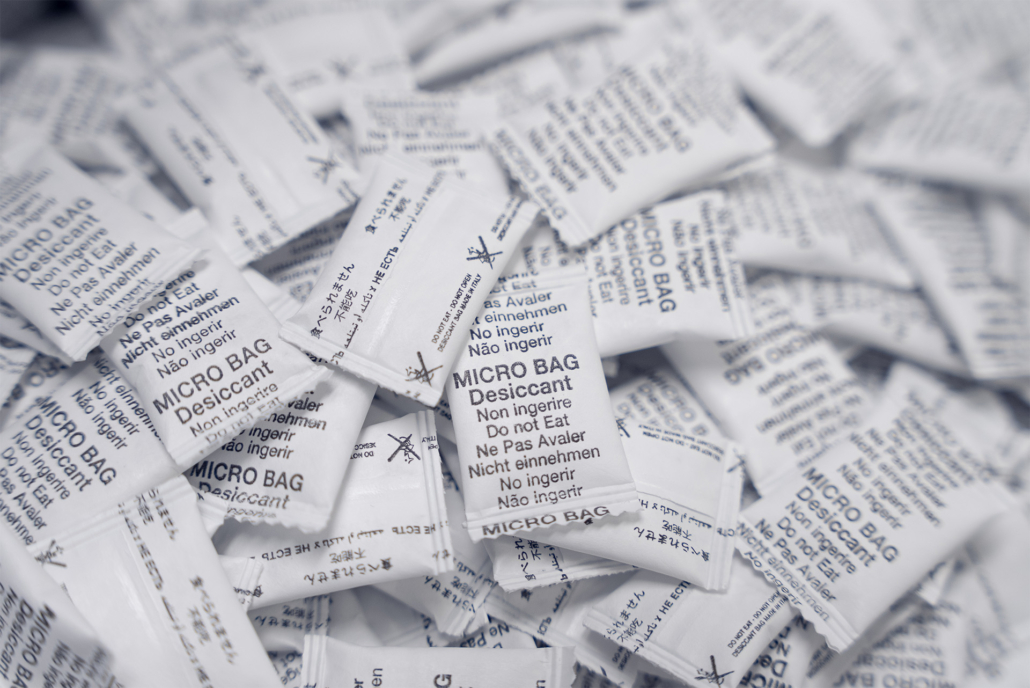
Levosil will be exhibiting at CPHI Milan, taking place at Fiera Milano from October 6 to 8, 2026. We will be pleased to welcome you at our stand 11K49. At the trade fair, Levosil will present its range of desiccant sachets developed specifically for pharmaceutical applications. These include sachets for protecting pharmaceutical APIs in bulk packaging and the full Micro Bag range of desiccant sachets, designed for direct contact use inside pharmaceutical and nutraceutical packaging. Levosil is certified to ISO 15378, the international standard for primary packaging materials for medicinal products. In addition, it operates as a MOCA producer registered with the local health authority, supporting the use of its products in direct contact with medicines and food.


🇫🇷 Français

Levosil sera exposant à CPHI Milan, qui se tiendra à Fiera Milano du 6 au 8 octobre 2026. Nous serons ravis de vous accueillir sur notre stand 11K49. À l’occasion du salon, Levosil présentera sa gamme de sachets déshydratants développés spécifiquement pour les applications pharmaceutiques. Parmi eux, des sachets destinés à la protection des API pharmaceutiques en vrac ainsi que toute la gamme de sachets dessiccants Micro Bag, conçue pour un usage en contact direct à l’intérieur des emballages pharmaceutiques et nutraceutiques. Levosil est certifiée ISO 15378, la norme internationale relative aux matériaux d’emballage primaire destinés aux médicaments. En outre, elle est enregistrée comme producteur MOCA auprès de l’autorité sanitaire locale, garantissant l’utilisation de ses produits au contact direct des médicaments et des aliments.


🇪🇸 Español

Levosil estará presente como expositora en CPHI Milan, que tendrá lugar en Fiera Milano del 6 al 8 de octubre de 2026. Será un placer recibirles en nuestro stand 11K49. Con motivo de la feria, Levosil presentará su gama de sachets desecantes desarrollados específicamente para aplicaciones farmacéuticas. Entre ellos, los sachets para la protección de API farmacéuticos en envases a granel y toda la gama de sobres desecantes Micro Bag, diseñada para su uso en contacto directo dentro del packaging farmacéutico y nutracéutico. Levosil está certificada según la norma ISO 15378, el estándar internacional para materiales de envase primario destinados a medicamentos. Además, opera como productor MOCA registrado ante la autoridad sanitaria local, lo que respalda el uso de sus productos en contacto directo con medicamentos y alimentos.


🇩🇪 Deutsch


Levosil wird als Aussteller auf der CPHI Milan vertreten sein, die vom 6. bis 8. Oktober 2026 auf der Fiera Milano stattfindet. Wir freuen uns, Sie an unserem Stand 11K49 begrüßen zu dürfen. Im Rahmen der Messe wird Levosil seine Reihe von Trockenmittelbeuteln präsentieren, die speziell für pharmazeutische Anwendungen entwickelt wurden. Dazu gehören Beutel zum Schutz pharmazeutischer APIs in Großpackungen sowie die gesamte Micro-Bag-Reihe von Trockenmittelbeuteln, die für den direkten Kontakt im pharmazeutischen und nutraceutischen Verpackungsbereich konzipiert wurde. Levosil ist nach ISO 15378 zertifiziert, dem internationalen Standard für Primärverpackungsmaterialien für Arzneimittel. Darüber hinaus ist das Unternehmen als MOCA-Hersteller bei der örtlichen Gesundheitsbehörde registriert und unterstützt damit den Einsatz seiner Produkte im direkten Kontakt mit Arzneimitteln und Lebensmitteln.


🇷🇴Română

Levosil va fi prezentă ca expozantă la CPHI Milan, care va avea loc la Fiera Milano în perioada 6–8 octombrie 2026. Vă așteptăm cu drag la standul nostru 11K49. Cu ocazia târgului, Levosil va prezenta gama sa de plicuri desicante dezvoltate special pentru aplicații farmaceutice. Printre acestea se numără plicurile pentru protecția API-urilor farmaceutice în ambalare vrac și întreaga gamă de plicuri desicante Micro Bag, concepute pentru utilizare în contact direct în interiorul ambalajelor farmaceutice și nutraceutice. Levosil este certificată ISO 15378, standardul internațional pentru materialele de ambalare primară destinate produselor medicamentoase. În plus, operează ca producător MOCA înregistrat la autoritatea sanitară locală, ceea ce susține utilizarea produselor sale în contact direct cu medicamentele și alimentele.

🇵🇱 Polski


Levosil będzie wystawcą na targach CPHI Milan, które odbędą się w Fiera Milano w dniach 6–8 października 2026 roku. Serdecznie zapraszamy na nasze stoisko 11K49. Z okazji targów Levosil zaprezentuje swoją gamę saszetek osuszających opracowanych specjalnie do zastosowań farmaceutycznych. Wśród nich znajdą się saszetki do ochrony farmaceutycznych API w opakowaniach zbiorczych oraz cała gama saszetek osuszających Micro Bag, zaprojektowana do bezpośredniego kontaktu wewnątrz opakowań farmaceutycznych i nutraceutycznych. Levosil posiada certyfikat ISO 15378, międzynarodowej normy dla materiałów opakowaniowych pierwotnych przeznaczonych dla produktów leczniczych. Ponadto działa jako producent MOCA zarejestrowany w lokalnym ASL, co potwierdza możliwość stosowania naszych produktów w bezpośrednim kontakcie z lekami i żywnością.

🇬🇷 Ελληνικά


Η Levosil θα συμμετάσχει ως εκθέτης στην CPHI Milan, η οποία θα πραγματοποιηθεί στη Fiera Milano από 6 έως 8 Οκτωβρίου 2026. Θα είναι χαρά μας να σας υποδεχτούμε στο περίπτερό μας 11K49. Στο πλαίσιο της έκθεσης, η Levosil θα παρουσιάσει τη σειρά αποξηραντικών σακουλιών της, που έχει αναπτυχθεί ειδικά για φαρμακευτικές εφαρμογές. Σε αυτά περιλαμβάνονται σακουλάκια για την προστασία φαρμακευτικών API σε χύδην συσκευασία, καθώς και ολόκληρη η σειρά αποξηραντικών φακέλων Micro Bag, σχεδιασμένη για άμεση επαφή μέσα στη φαρμακευτική και nutraceutical συσκευασία. Η Levosil είναι πιστοποιημένη κατά ISO 15378, το διεθνές πρότυπο για υλικά πρωτογενούς συσκευασίας φαρμακευτικών προϊόντων. Επιπλέον, λειτουργεί ως παραγωγός MOCA με καταχώριση στην τοπική υγειονομική αρχή, γεγονός που υποστηρίζει τη χρήση των προϊόντων της σε άμεση επαφή με φάρμακα και τρόφιμα.

Natural and Safe Dehydrating Solution

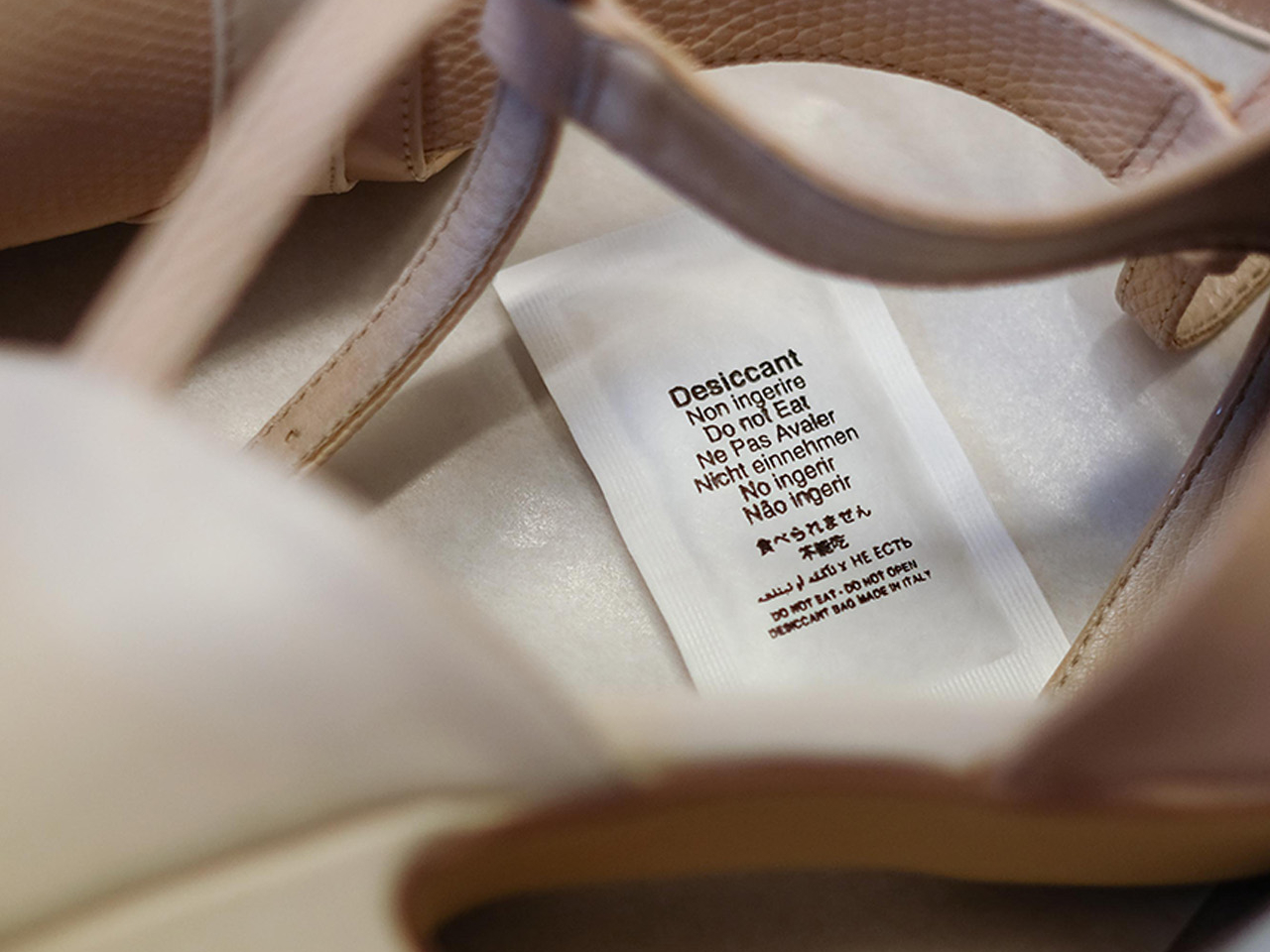
The Moisture Grabber is a dehydrating bag specifically designed for the leather goods market to eliminate quality issues associated with excess moisture in packaging. Preventing mold growth ensures that product quality remains intact even during long-term storage or sea transport in containers. The Moisture Grabber is manufactured in Italy, contains no fungicides, and does not emit any chemical substances.

Disidratante Naturale

Natural Activated Clay The dehydrating clay is a calcium bentonite that naturally adsorbs and traps moisture, removing it from the environment in which it is placed. The clay used in the Moisture Grabber complies with technical standards DIN 55473, MIL 3464E, NFH00320.

The dehydrating clay is identified by CAS number 1302-78-29. The dehydrating clay in the Moisture Grabber is a natural mineral quarry product, thus exempt from REACH registration obligations under Article 2, paragraph 7, letter (b). Besides being exempt from registration, the clay is a non-hazardous substance, free of SVHC substances, or any with PBT or vPvB classification, so there’s no need for exposure assessments or use communications along the supply chain.

Printing is done with inks suitable for food packaging, using typographic technology to ensure maximum readability, making the Moisture Grabber suitable for high-end products. The information on the bag is printed in Italian, English, Japanese, French, German, and Spanish.

The packaging allows a view of the natural desiccant inside the bag without releasing dust from the desiccant. The selected non-woven fabric is food-safe and classified as Type B (low dust release) according to DIN 55473 technical standards.

The number of dehydrating bags to use should be determined based on the product to be protected, the volume and type of chosen packaging, and the desired shelf life. Pay particular attention to the water vapor permeability of the packaging to be used.

Dehydrating Bags – “Salts”

Dehydrating bags (commonly also referred to as “salts”) are used to remove moisture from within a package to preserve the quality of the products inside.

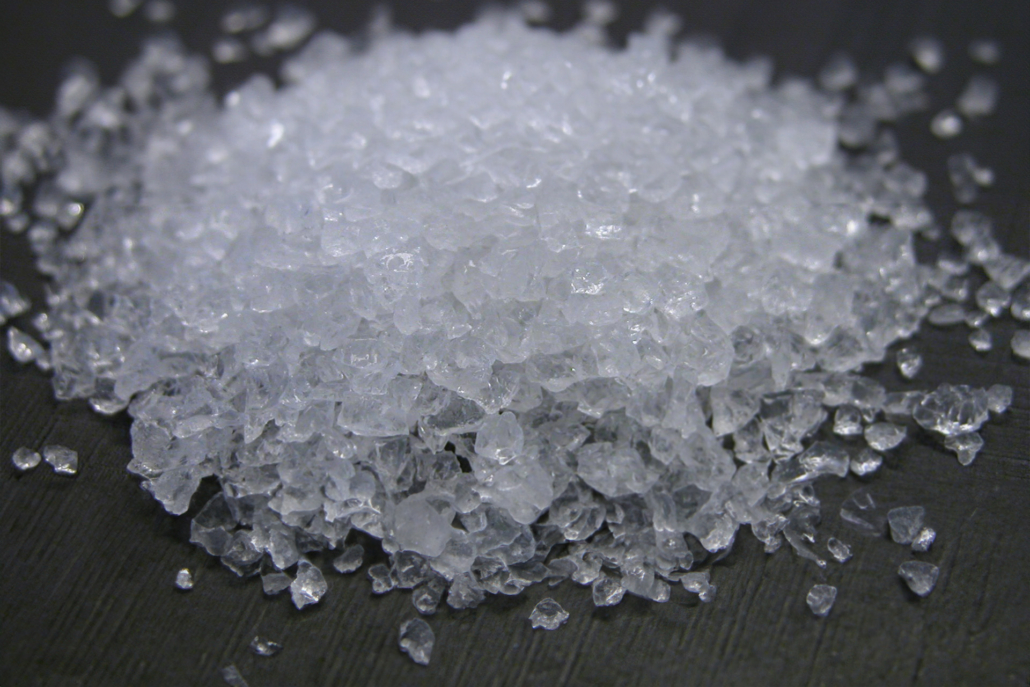
Although often called “dehydrating salts,” none of the desiccants used for packaging protection are actually salts. In fact, the DIN 55473 industry standard specifies that dehydrating bags must not contain any trace of salt (chlorides) to prevent oxidation when in direct contact with metal surfaces. Over the years, desiccants have been likened to salt, likely because silica gel resembles coarse kitchen salt and because salt itself has hygroscopic properties. However, salt is not technically a dehydrating agent, as it adsorbs moisture but does not retain it as effectively as clay or silica gel.

Why Are Salts Not Used in Packaging?

Firstly, dehydrating bags are placed inside packaging in direct contact with goods that need protection, so they must not cause any type of oxidation.

Secondly, silica gel and dehydrating clay have characteristics that common salts do not possess.

Desiccants Are Highly Efficient Materials:

  • They can reduce relative humidity to levels below 4%.
  • They do not easily release adsorbed moisture.

The primary desiccants used for packaging protection are:

  • Calcium Bentonie (also known as Montmorillonite, Salt, Expanded Clay, Active Clay, Desiccant, Bentonite, Dried Clay)
  • Silica Gel (often also called Salt, Silica Gel, Silica, Silicon, Drying Gel)

Are Salts Used in Protective Packaging?

The distinction between desiccants (silica gel and clay) and salts is important to avoid misunderstandings in certain situations.

Calcium chloride (which is indeed a salt) finds its natural application in dehydrating bags used to protect containers from the “rain effect.”

In this context, it’s necessary to absorb large amounts of moisture without needing to reach low relative humidity levels (typically aiming to maintain relative humidity around 50% within the container). Thus, the characteristics of calcium chloride make it the ideal desiccant for this purpose.

It is a hygroscopic salt characterized by a high capacity (the amount of water vapor it can remove from the environment) and limited efficiency (the dryness level it creates around itself is about 40% relative humidity).

Desiccant Selection

Protection within packaging

  • Dehydrating Clay: General industrial use.
  • Silica Gel: Pharmaceutical industry.

Transport Protection via Container

  • Calcium Chloride: Levodry Gel, Container Bag.

How to Prevent Mold on Shoes

The Source of the Problem

The moisture naturally present in leather, combined with that from the manufacturing process (e.g., water-based adhesives), can cause excess moisture to accumulate inside the packaging, creating an environment conducive to mold growth.

Excess moisture may also cause a loss of leather sheen, forming a dull layer over the shoe’s surface. Finally, mold growth is almost always accompanied by a bad odor that permeates the shoes.

Products most prone to these issues are:

  • Shoes;
  • Leather goods;
  • Leather bags;
  • Hygroscopic materials.

Mold can also develop on entirely synthetic materials when favorable conditions (humid heat) are present.

The Solution

Anti-mold clay bags absorb moisture from their surroundings, removing the key factor that allows fungal spores to thrive.

This solution is simple, easy to implement, and, most importantly, safe for end users and operators.

These dehydrating bags do not release any chemicals into the packaging. Being a natural, non-labeled desiccant compliant with all safety regulations, they can be safely used even in packaging that will eventually reach consumers.

Removing moisture completely eliminates the conditions that cause mold growth, regardless of the strain. Commercial anti-fungal cards, which use synthetic products, may not offer complete action and allow mold to grow due to unremoved moisture in the packaging.

Advantages of a Natural Solution

The desiccant does not release chemicals and does not alter the leather’s scent. No chemicals are released that could affect the leather’s sheen, and there are no potentially hazardous chemicals. Mold growth is inhibited by removing excess moisture, not by using chemical fungicides.

Precautions Regarding Hygroscopic Materials

An essential aspect when addressing mold issues in leather goods packaging is to ensure that all hygroscopic elements (such as paper and cardboard) are dry and stored in conditions that prevent excess moisture accumulation. Most moisture inside packaging usually originates from the cardboard box. Properly stored packaging elements greatly reduce the amount of desiccant needed.

Dehydrating Unit

The Problem

Dehydrating bags are generally made using Silica Gel and Dehydrating Clay.

  • Silica Gel is a synthetic desiccant obtained by acidifying sodium silicate, followed by washing and drying.
  • Dehydrating Clay is a naturally sourced bentonite that is quarried, sieved, and dried.

When produced, stored, and processed correctly, Silica Gel performs consistently (no variations across different batches), with an efficiency of 20% of its weight in grams of adsorbed water vapor (96g) under DIN test conditions of 23°C and 40% RH. For this reason, silica gel bags have always been sold and purchased by weight; two 480g silica gel dehydrating bags, regardless of the manufacturer, will have identical performance, provided both manufacturers use quality silica gel and process and package the product according to industry standardsDehydrating clay, on the other hand, is a natural product, so its performance is not always consistent. Moreover, not all clays meet the requirements for dehydration us.

Dehydrating clay, on the other hand, is a natural product, so its performance is not always consistent. Moreover, not all clays meet the requirements for dehydration use.

A 480g clay dehydrating bag may have variable performance, ranging from 18% to 19.5%, adsorbing between 86.4g and 93.6g of water vapor or, in the worst case, if it is made using unsuitable clay, it may have no effect or even release moisture within the packaging.

o determine the performance of clay dehydrating bags, the user should conduct an absorption test and, each time, request the performance details of the clay used for subsequent supplies.

Obviously, at an industrial level, this process would be impractical, so international production standards have been developed to classify and regulate the production of clay dehydrating bags.

Among the various standards, the concept of the Dehydrating Unit was introduced.

The dehydrating unit is the amount of desiccant needed to adsorb XX grams of water vapor in a climate chamber under 23°C and 40% RH conditions.

DIN MIL NHF

The main standards are:

  • NFH 0321: One dehydrating unit equals the amount of desiccant needed to adsorb 100g of water vapor.
  • DIN 55473: One dehydrating unit equals the amount of desiccant needed to adsorb 6g of water vapor.
  • MIL 3464: One dehydrating unit equals the amount of desiccant needed to adsorb 6g of water vapor.

In other words:

  • 1 NFH Unit = 16 DIN Units = 16 MIL Units
  • 1/16 NFH Unit = 1 DIN Unit = 1 MIL Unit

Why Introduce the Dehydrating Unit Concept?

When buying or selling a dehydrating bag, it’s always helpful to refer to the dehydrating unit because the aim is to buy or sell not the weight in grams of clay but the weight in grams of water vapor the bag will remove. The bag’s weight may vary (within certain limits), but performance remains consistent.

The Key Takeaway:

When buying a clay dehydrating bag, you are purchasing its final performance (for which the manufacturer is responsible), not its weight in grams.

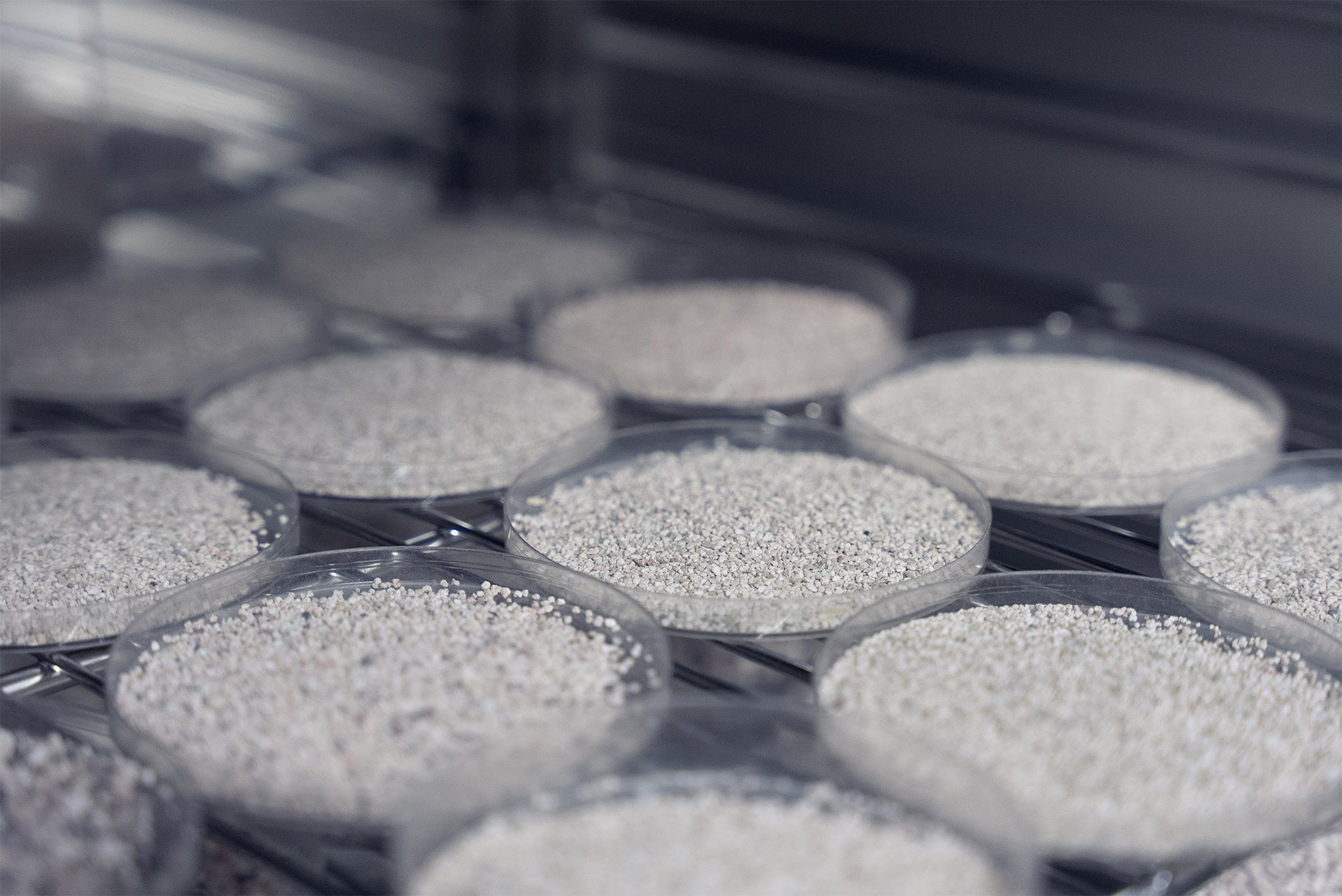
Levosil tests the performance of each batch (1,000 kg) of raw materials in a climate chamber to ensure that all produced dehydrating bags meet standards.

Climate chamber samples of various batches for dehydrating performance testing

The “French” NFH standard = Grams of water vapor adsorbed under 23°C / 40% RH conditions = MIL/DIN standard

  • 1 NFH Unit = 100g of adsorbed water vapor = 16 MIL/DIN Units
  • 1/2 NFH Unit = 50g of adsorbed water vapor = 8 MIL/DIN Units
  • 1/4 NFH Unit = 25g of adsorbed water vapor = 4 MIL/DIN Units
  • 1/8 NFH Unit = 12.5g of adsorbed water vapor = 2 MIL/DIN Units
  • 1/16 NFH Unit = 6.25g of adsorbed water vapor = 1 MIL/DIN Unit
  • 1/32 NFH Unit = 3.12g of adsorbed water vapor = 1/2 MIL/DIN Unit
  • 1/50 NFH Unit = 2g of adsorbed water vapor = 1/3 MIL/DIN Unit
  • 1/100 NFH Unit = 1g of adsorbed water vapor = 1/6 MIL/DIN Unit