Tag Archive for: Natural Activated Clay

Levosil desiccant bags are compliant with MIL-D-3464

Short answer

Yes. Levosil desiccant bags filled with silica gel and activated clay comply with the U.S. military specification MIL-D-3464E (Desiccants, Activated, Bagged, Packaging Use and Static Dehumidification), in Type I (clay) and Type II(silica gel) configurations.

Compliance is possible because our bags use adsorbent, non-deliquescent desiccants, as required by clause 3.2.1 of the standard. The Levodry Gel (calcium chloride based) meets a different requirement — protection of goods inside shipping containers — and, by its chemical nature, falls outside the scope of MIL-D-3464.


What MIL-D-3464E requires

MIL-D-3464E, issued by the U.S. Department of Defense in 1987, defines the requirements for bagged desiccants used in military and industrial packaging to prevent corrosion and mildew in enclosed spaces.

Key requirements of the standard:

  • Non-deliquescent material (clause 3.2.1): the desiccant must not liquefy upon water uptake.
  • Minimum adsorption capacity: 3.00 g of water vapor at 20% RH and 6.00 g at 40% RH, per desiccant unit, at 25 °C.
  • Maximum unit weight: 50 g per unit.
  • Reactivation: after regeneration at 118.3 °C, the bag must retain at least 90% of its original capacity.
  • Three classifications:
    • Type I — general purpose (typically clay)
    • Type II — non-dusting (typically silica gel in Tyvek®)
    • Type III — specific conditions (8 and 16 units only)

Why silica gel complies and calcium chloride does not

The technical distinction is chemical and relates to how the material captures moisture.

Adsorption (silica gel, clay, molecular sieves)

Water vapor is trapped on the porous surface of each granule by physical forces. The material remains solid, dry, non-deliquescent. It can be regenerated in an oven. It meets clause 3.2.1 of MIL-D-3464E.

Absorption (calcium chloride)

Calcium chloride is deliquescent: it captures moisture and turns into a saline liquid solution, retained inside the bag by a gelling matrix and impermeable envelope. Its absorption capacity is much higher than silica gel (up to 300% of its weight), but it does not satisfy the non-deliquescence requirement of MIL-D-3464E.

This is why Levodry Gel is designed for a different reference standard: DIN 55474 (protection of goods in shipping containers) and container rain prevention practices.


Levosil compliance matrix by product family

ProductDesiccantMIL-D-3464EDIN 55473REACHUFI / CLP
Desiccant bagsSilica gel✓ Type II✓ Type A/B/Tyvek®Not required
Desiccant bagsActivated clay✓ Type I✓ Type A/BNot required
Desiccant bagsMolecular sievesNot required
Levodry GelCalcium chlorideOut of scope (deliquescent)
Pharma Micro BagSilica gel / sieves✓ Type II✓ Tyvek®Not required

The UFI (Unique Formula Identifier) is mandatory since 1 January 2021 under Regulation (EU) 2017/542 and Annex VIII of the CLP, but only for mixtures classified as hazardous. Levodry Gel is notified through the ECHA PCN portal and the Italian ISS. Silica gel, clay and molecular sieve bags do not require UFI notification because they are not hazardous mixtures under the CLP.


What “MIL-D-3464 compliant” means in practice

A MIL-D-3464 compliant bag must guarantee four things:

  1. Measurable performance — adsorption verified under standard conditions.
  2. Chemical safety — non-deliquescent, non-corrosive toward steel, brass, aluminum, magnesium (clause 3.11).
  3. Reusability — reactivable by oven drying.
  4. Traceability — labeling that identifies nomenclature, specification, type, number of units, reactivation temperature and time, manufacturer.

Levosil has been manufacturing bags that meet these characteristics since 1964, from its plant in Chiusa di San Michele (Turin, Italy), with ISO 9001 and ISO 15378 (pharmaceutical primary packaging) certifications.


Levosil’s complete regulatory set

Levosil is among the few European desiccant bag manufacturers covering the full regulatory spectrum:

  • MIL-D-3464E (U.S. military specification) — silica gel and clay bags
  • DIN 55473 (German packaging desiccant standard) — Type A and B
  • DIN 55474 (desiccant sizing for maritime packaging) — Levodry Gel
  • REACH (EC Regulation 1907/2006) — all raw materials
  • UFI / CLP (EU Regulation 2017/542, CLP Annex VIII) — Levodry Gel notified
  • ISO 9001 (quality) and ISO 15378 (pharmaceutical GMP primary packaging)
  • FSC® Chain of Custody — certified paper for envelopes
  • DMF-free (Commission Decision 2009/251/EC) — declaration of conformity available

How to request the MIL-D-3464 declaration of conformity

The MIL-D-3464E declaration of conformity for Levosil bags is issued upon request, referenced to the production lot. It includes desiccant type, number of units, verified adsorption capacity, recommended reactivation temperature and time, and envelope information (Type A, Type B, Tyvek®).


You can contact us now for more information: 0039 011 96 43 430
📧 info@levosil.com
Natural and Safe Dehydrating Solution

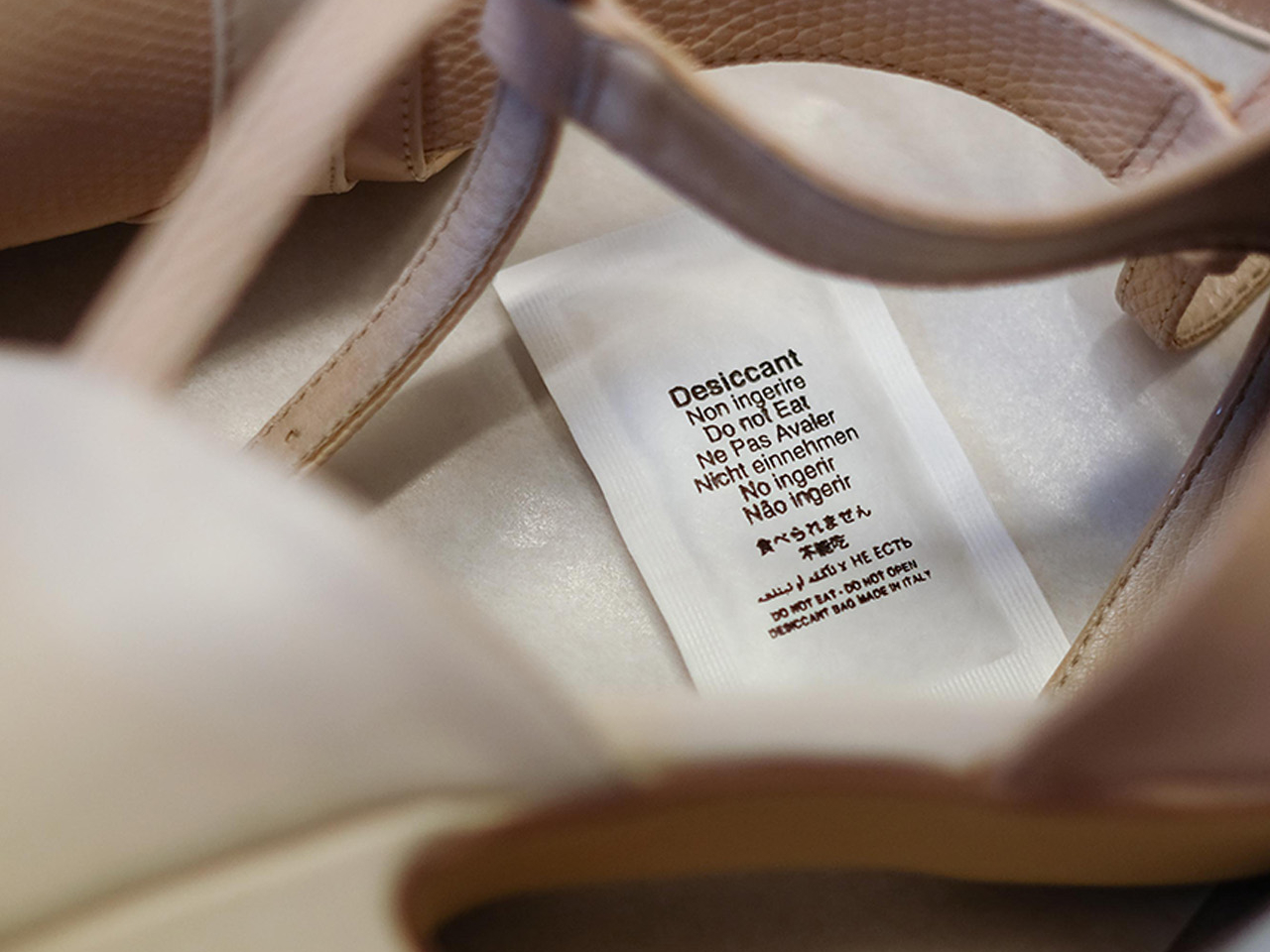
The Moisture Grabber is a dehydrating bag specifically designed for the leather goods market to eliminate quality issues associated with excess moisture in packaging. Preventing mold growth ensures that product quality remains intact even during long-term storage or sea transport in containers. The Moisture Grabber is manufactured in Italy, contains no fungicides, and does not emit any chemical substances.

Disidratante Naturale

Natural Activated Clay The dehydrating clay is a calcium bentonite that naturally adsorbs and traps moisture, removing it from the environment in which it is placed. The clay used in the Moisture Grabber complies with technical standards DIN 55473, MIL 3464E, NFH00320.

The dehydrating clay is identified by CAS number 1302-78-29. The dehydrating clay in the Moisture Grabber is a natural mineral quarry product, thus exempt from REACH registration obligations under Article 2, paragraph 7, letter (b). Besides being exempt from registration, the clay is a non-hazardous substance, free of SVHC substances, or any with PBT or vPvB classification, so there’s no need for exposure assessments or use communications along the supply chain.

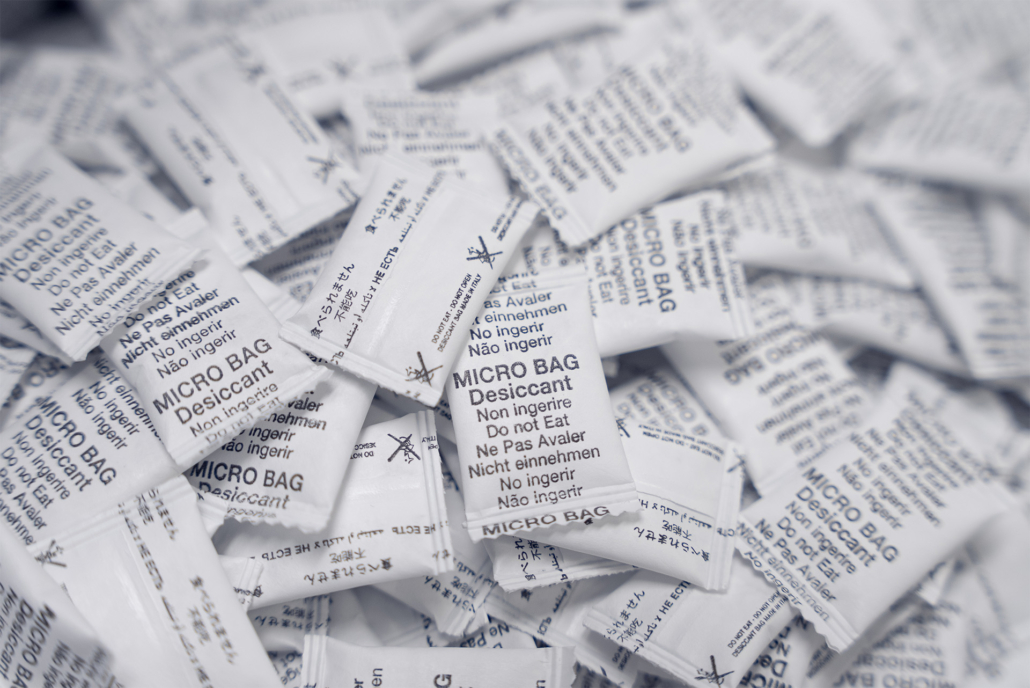
Printing is done with inks suitable for food packaging, using typographic technology to ensure maximum readability, making the Moisture Grabber suitable for high-end products. The information on the bag is printed in Italian, English, Japanese, French, German, and Spanish.

The packaging allows a view of the natural desiccant inside the bag without releasing dust from the desiccant. The selected non-woven fabric is food-safe and classified as Type B (low dust release) according to DIN 55473 technical standards.

The number of dehydrating bags to use should be determined based on the product to be protected, the volume and type of chosen packaging, and the desired shelf life. Pay particular attention to the water vapor permeability of the packaging to be used.

Dehydrating Bags – “Salts”

Dehydrating bags (commonly also referred to as “salts”) are used to remove moisture from within a package to preserve the quality of the products inside.

Although often called “dehydrating salts,” none of the desiccants used for packaging protection are actually salts. In fact, the DIN 55473 industry standard specifies that dehydrating bags must not contain any trace of salt (chlorides) to prevent oxidation when in direct contact with metal surfaces. Over the years, desiccants have been likened to salt, likely because silica gel resembles coarse kitchen salt and because salt itself has hygroscopic properties. However, salt is not technically a dehydrating agent, as it adsorbs moisture but does not retain it as effectively as clay or silica gel.

Why Are Salts Not Used in Packaging?

Firstly, dehydrating bags are placed inside packaging in direct contact with goods that need protection, so they must not cause any type of oxidation.

Secondly, silica gel and dehydrating clay have characteristics that common salts do not possess.

Desiccants Are Highly Efficient Materials:

  • They can reduce relative humidity to levels below 4%.
  • They do not easily release adsorbed moisture.

The primary desiccants used for packaging protection are:

  • Calcium Bentonie (also known as Montmorillonite, Salt, Expanded Clay, Active Clay, Desiccant, Bentonite, Dried Clay)
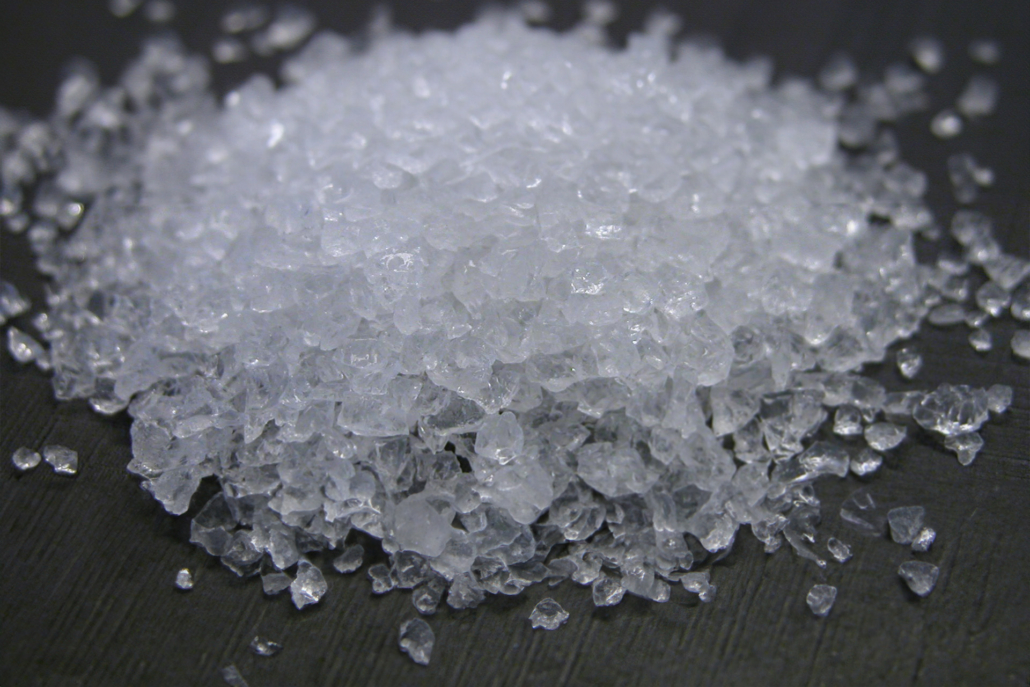
  • Silica Gel (often also called Salt, Silica Gel, Silica, Silicon, Drying Gel)

Are Salts Used in Protective Packaging?

The distinction between desiccants (silica gel and clay) and salts is important to avoid misunderstandings in certain situations.

Calcium chloride (which is indeed a salt) finds its natural application in dehydrating bags used to protect containers from the “rain effect.”

In this context, it’s necessary to absorb large amounts of moisture without needing to reach low relative humidity levels (typically aiming to maintain relative humidity around 50% within the container). Thus, the characteristics of calcium chloride make it the ideal desiccant for this purpose.

It is a hygroscopic salt characterized by a high capacity (the amount of water vapor it can remove from the environment) and limited efficiency (the dryness level it creates around itself is about 40% relative humidity).

Desiccant Selection

Protection within packaging

  • Dehydrating Clay: General industrial use.
  • Silica Gel: Pharmaceutical industry.

Transport Protection via Container

  • Calcium Chloride: Levodry Gel, Container Bag.

How to Prevent Mold on Shoes

The Source of the Problem

The moisture naturally present in leather, combined with that from the manufacturing process (e.g., water-based adhesives), can cause excess moisture to accumulate inside the packaging, creating an environment conducive to mold growth.

Excess moisture may also cause a loss of leather sheen, forming a dull layer over the shoe’s surface. Finally, mold growth is almost always accompanied by a bad odor that permeates the shoes.

Products most prone to these issues are:

  • Shoes;
  • Leather goods;
  • Leather bags;
  • Hygroscopic materials.

Mold can also develop on entirely synthetic materials when favorable conditions (humid heat) are present.

The Solution

Anti-mold clay bags absorb moisture from their surroundings, removing the key factor that allows fungal spores to thrive.

This solution is simple, easy to implement, and, most importantly, safe for end users and operators.

These dehydrating bags do not release any chemicals into the packaging. Being a natural, non-labeled desiccant compliant with all safety regulations, they can be safely used even in packaging that will eventually reach consumers.

Removing moisture completely eliminates the conditions that cause mold growth, regardless of the strain. Commercial anti-fungal cards, which use synthetic products, may not offer complete action and allow mold to grow due to unremoved moisture in the packaging.

Advantages of a Natural Solution

The desiccant does not release chemicals and does not alter the leather’s scent. No chemicals are released that could affect the leather’s sheen, and there are no potentially hazardous chemicals. Mold growth is inhibited by removing excess moisture, not by using chemical fungicides.

Precautions Regarding Hygroscopic Materials

An essential aspect when addressing mold issues in leather goods packaging is to ensure that all hygroscopic elements (such as paper and cardboard) are dry and stored in conditions that prevent excess moisture accumulation. Most moisture inside packaging usually originates from the cardboard box. Properly stored packaging elements greatly reduce the amount of desiccant needed.